
Web Security Best Practices: Protecting Modern Websites from Cyber Threats
Websites have evolved into applications that are more interconnected, data-driven and interactive than you might think. However, along that growth comes a very real problem; an increase in the number of cyber threats on companies of all sizes. Stolen customer data, ransomware attacks and API exploitations are just a few of the many reasons web security is not an optional activity for companies.
One vulnerability can hurt revenue, consumer trust and overall brand image in just hours.
The challenge today is that it is not just large enterprises being targeted by attackers anymore. Small and medium organizations are an actual goal now, as more or less many even lack solid safety layers. Disillusioning passwords, unmaintainable plugins, insecure APIs and unfitting server configurations offer openings that aggressors are as of now hunting down.
This is exactly why security should be part of the Web Development process originating with building; not bolted-on later as some kind of neglected patchwork after-thought.
Strong opinion:Most businesses only start to care about security after their business has been breached. At that time, it had already reached a point of no return.
Web Protection is about prevention and monitoring (which are both normal, day-to-day practices) and continuous improvement. So let us dissect the top practices any modern website can follow to truly be safe.
Understanding Modern Web Security Threats
Almost every Serious Security Threats has advanced considerably over the past twelve months and modern websites are subject to a multitude of digital attacks.
Attackers leverage automated bots, AI-assisted scripts, phishing campaigns, and vulnerability scanners to achieve scale in exploiting weaknesses.
Some top threats include:
- SQL Injection attacks
- Credential stuffing
- Malware injections
- XDDoS attacks
- Session hijacking
- Cross-site scripting
- API abuse
The time of the average global data breach cost has reached $4.45 million in recent years according to IBM’s Cost of a Data Breach Report. Simply put, that number is how expensive lousy security can get.
A big problem is that many businesses rely on old, out of date systems or ignore the updates provided by software. This provides convenience to the attackers.
Here’s a quick overview:
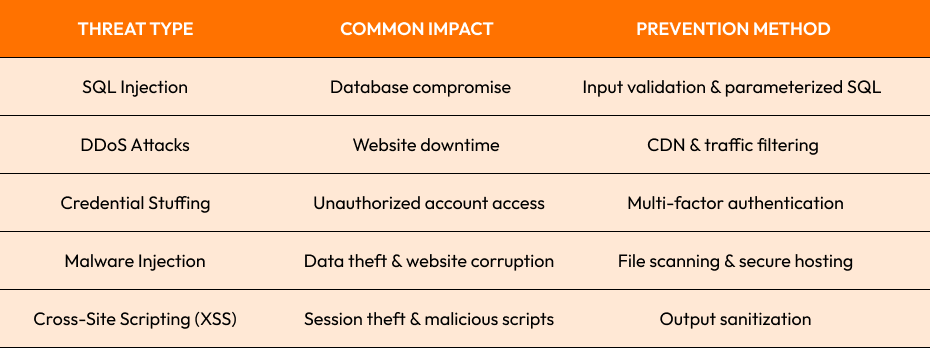
As a real world example, during the Equifax breach unpatched vulnerabilities made it possible to get hold of sensitive data for millions of users. The problem was solvable, and yet the financial and reputational impacts were enormous.
Strong opinion:Not picking up the updates and security audits is like leaving your office unlocked at night and just hoping nothing will happen.

Authentication and Authorization Best Practices
Robust Authentication and Authorization mechanisms are at the core of website security.
Authentication identifies a user. Authorization is what a given user can access. If either one fails, it compromises the whole system.
Sadly, the situation is that there are still many sites using weak password policies and outdated login systems. Attackers know this.
Modern best practices include:
- Multi-factor authentication (MFA)
- Storing passwords - Password hashing with bcrypt or Argon2
- Role-based access control (RBAC)
- Session expiration policies
- OAuth 2.0 implementation
- JWT token security
One of the most common errors people commit in businesses is allowing users or employees too much access. If credentials are stolen this exposes a huge attack surface.
According to Google, MFA can prevent more than 99% of automated account attacks. This is a tremendous security boost from just one fairly straightforward measure.
There are real world examples, such as when GitHub began to enforce stricter authentication policies after accounts had been compromised. And thus, drastically dropped the number of attacks against unauthorized access everywhere in the platform.
Zero-trust architecture is another important layer. Whereas once logged in users were trusted, now systems constantly validate access rights.
Strong opinion:Weak authentication is one of the most egregious security failures that a business can afford.
Convenience should always come second to protection.
Preventing Cross-Site Scripting (XSS) Attacks
The most common type of vulnerability in modern web applications, XSS attacks have not lost their relevance since 1999.
Cross-Site Scripting: In this attack, malignant scripts are injected into the trusted websites. The script executes in the user browsers when users visit the infected page. This is capable of stealing session cookies, redirecting users or altering the operation of websites.
There are three major types:
- Stored XSS
- Reflected XSS
- DOM-based XSS
The majority of Cross-Site Scripting vulnerabilities arise due to improper input sanitization by the developers.
Websites that want to protect themselves against these types of attacks should act by implementing:
- Input validation
- Output encoding
- Content Security Policies (CSP)
- Secure cookie settings
- HTTPOnly and SameSite attributes
To a certain extent they reduce risk, but do not completely remove it.
For example, British Airways was affected by the malicious script being used to hack payments information of customers. The financial penalties and damage to trust were massive.
Here’s the hard truth:
Users will leave your site if they do not trust it with their data, and more often than not, they won’t return.
Security is linked to reputation.
Securing APIs and Third-Party Integrations
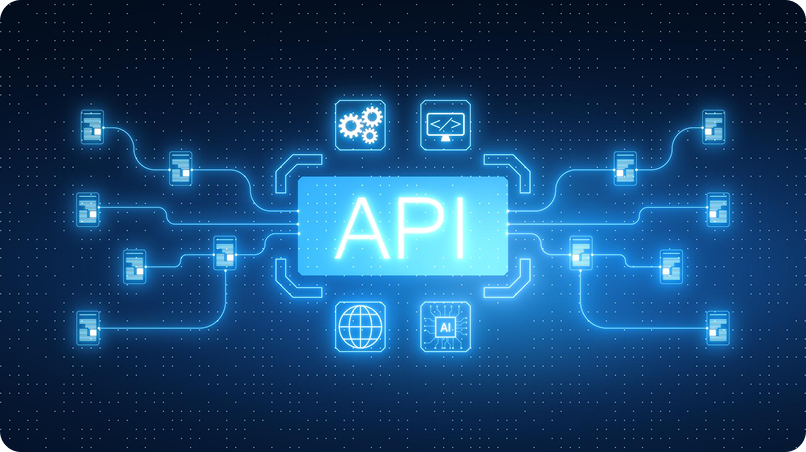
APIs are the backbone of modern applications. APIs facilitate communication between payment gateways, analytics tools, CRMs, and cloud platforms.
However, any API call creates a new attack surface.
API vulnerabilities can expose:
- Customer records
- Authentication tokens
- Payment information
- Internal system access
The OWASP API Security Top 10 highlights common API risks such as:
- Broken authentication
- Excessive data exposure
- Rate-limit failures
- Improper asset management
Here are the best practices for API security:
- API gateways
- Rate limiting
- Token-based authentication
- Encryption with HTTPS/TLS
- Request validation
- Access monitoring and logging
An excellent example of this is the Facebook API issues over the last few years with 3rd party integrations exposing user data outside of what was designed to be accessed.
This is exactly why the businesses have to audit third-party services regularly. Trusting third-party tools at face value is a recipe for disaster.
Strong opinion:
A lot of companies have a really good backend protecting the frontend of their website, but APIs are not as protected. That is like putting a heavy duty front door at home while keeping the back entry wide open.
The Future of Cybersecurity in Modern Web Development
The Future of Cybersecurity is moving towards self-defense AI systems and automation; proactive monitoring.
As attacks become faster and more sophisticated, Reactive security measures are no longer sufficient.
Modern cybersecurity trends include:
- AI-powered threat detection
- Behavioral analytics
- Zero-trust security frameworks
- Real-time monitoring systems
- Automated vulnerability scanning
- Endpoint detection and response (EDR)
Similarly, the cloud infrastructure is also reshaping how security operates. With all these changes happening, businesses now require much stronger protection distributed across operations in remote environments and hybrid architecture.
Global cybercrime costs can surpass tens of trillions every year, per Cybersecurity Ventures. It indicates just how grave the problem has become.
One exciting trend is DevSecOps, bringing security directly into the pipeline development process. Security validation occurs throughout development rather than waiting until deployment.
And this is where the businesses need to change their way of thinking.
Strong opinion:
Development efforts should be informed, not impeded by security.
When systems are developed quickly, without attention to security, they may work for a while, but will eventually become liabilities.
Final Thoughts
Antivirus and infrequent software updates alone may not be enough to protect websites from contemporary cyber threats. It requires a multi-layered approach that fuses secure coding, authentication controls, API protection and constant monitoring.
The reality is simple: Cyberattacks are now an all too common event. They are repetitive, are programmed and are getting smarter.
The reality is simple:
Cyberattacks are now an all too common event. They are repetitive, are programmed and are getting smarter.
Common Security Challenges:
- Weak authentication systems
- Poor API security
- Outdated plugins and frameworks
- Lack of employee awareness
- Insufficient monitoring
Best Practices:
- Enforce strong access controls
- Monitor vulnerabilities continuously
- Implement secure coding standards
- Conduct regular penetration testing
- Always keep systems updated
Business with tangible security earns higher trust, better stability and longer resilience.
Ignoring it means taking a crash course on getting feedback.
Want to Strengthen your website security?
A website which manages customer data, transactions or sensitive business operations can not afford the mistake of treating security as an afterthought.
We amass our efforts specifically on building secure scalable modern web systems that can serve to resist evolving threats and be safeguards against your long-term growth at Crescentic Digital.
Need to prevent your website from vulnerabilities before they slip into dangerous life and death?
Head to our Contact Page today and let’s create a bold step forward for an even stronger, safer digital environment for your business!
Start Your Expert Consultation
Please write your name and contact information below. We will respond as soon as possible.