Shopify vs eBay: Why Ownership Drives Real Business Growth
When considering Shopify vs eBay, many entrepreneurs face a crucial decision: which platform is the best for growing their business? Both have unique advantages, but the long-term success of your brand depends on ownership and control. At Crescentic Digital, we believe owning your store offers more freedom and growth opportunities.
The real question is, how much control do you want over your brand? Shopify vs eBay offers two different paths, one where you're building your own store, and one where you're at the mercy of a marketplace. By owning your storefront, you get the flexibility to create a unique experience and drive lasting success.
Owning Your Digital Storefront: Building Real Brand Equity
When you create your own digital storefront, you’re not just listing products, you’re building a brand presence online. Unlike selling on a marketplace, owning your platform gives you the power to design and control every aspect of the shopping experience. This helps shape how customers perceive and connect with your brand.
With Shopify, your digital storefront becomes a direct reflection of your business. You can tailor it to align with your vision and values, offering customers a personalized shopping journey. This customization creates long-term loyalty because shoppers feel they’re engaging with a brand, not just another listing in a marketplace like eBay.
Imagine your own digital storefront where you can showcase your unique branding, integrate customer engagement tools, and highlight products in a way that stands out. This control gives you the flexibility to create a shopping experience that marketplace platforms like eBay simply can’t provide, allowing you to make a lasting impression.
If you're ready to start building your own digital storefront, explore our Shopify development services and take the first step towards controlling your brand's growth.

Brand Experience Control: Shaping Your Unique Brand Identity
Brand experience is one of the most powerful tools you have when running your own online store. When comparing Shopify vs eBay, owning your store on Shopify gives you complete control over every detail, from the design to the checkout process. This freedom lets you craft a seamless experience that resonates with customers and keeps them coming back for more.
With Shopify, your brand experience can truly shine, allowing you to create a unique identity that reflects your values and style. Unlike eBay, where you’re stuck with their pre-designed templates, Shopify lets you build a personalized shopping experience that stands out. This customization builds trust and loyalty, helping you outshine the competition.
First Party Customer Data: Unlocking Insights for Growth
First party customer data is your secret weapon for growth when you own your own store. With Shopify, you can access valuable insights into customer preferences, behavior, and purchase habits. This data helps you make smarter business decisions, from adjusting your marketing strategies to improving your product offerings based on what customers actually want.
Without access to first party customer data, selling on platforms like eBay can feel like you're operating in the dark. eBay controls the customer relationship, which means you don’t get to know your audience like you would on Shopify. This limits your ability to improve and grow based on customer insights. For more on why it matters for marketing success, check out this in‑depth article on the benefits of first‑party data.
Shopify makes it easy to collect first party customer data and use it to your advantage. With advanced analytics tools, you can track everything from customer demographics to which products are most popular. This gives you the data-driven edge you need to refine your strategy, create better products, and deliver a personalized experience.

Marketplace Risk: Why Relying on Third-Party Platforms Limits Growth
Marketplace risk is something many entrepreneurs overlook when starting on platforms like eBay. When comparing Shopify vs eBay, the risks such as high fees, changing policies, or even sudden platform downtimes can severely affect your business. These factors are completely out of your control, which makes relying on third-party platforms risky for long-term success.
When you sell on eBay, you don’t own the customer relationship, and you're at the mercy of their rules. Marketplace risk can also come in the form of algorithm changes, hidden fees, or sudden policy updates. These factors can impact your visibility and sales. Below is the table comparing how it differs between selling on eBay and owning a Shopify store.
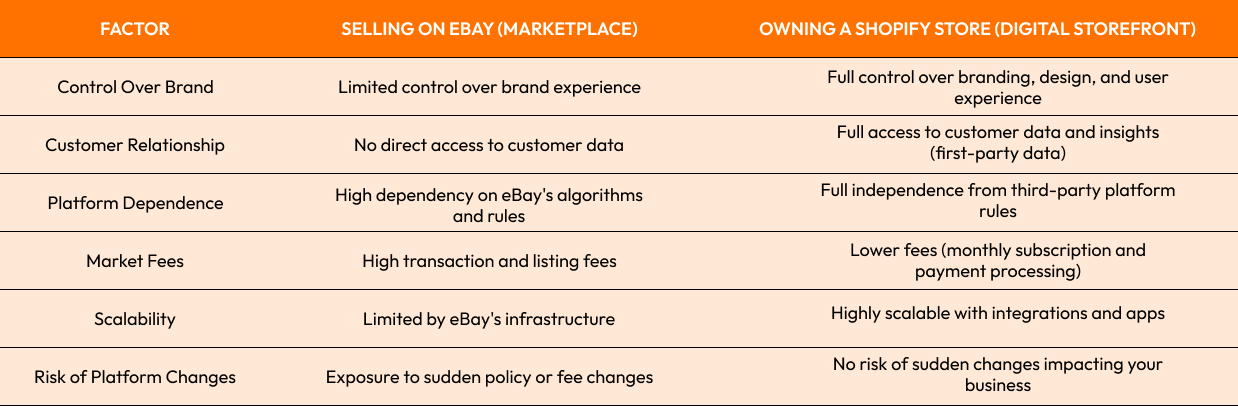
This table highlights the risks and advantages of each platform, offering a clear comparison of how marketplace risk can affect your business's growth and stability.
Scalable eCommerce Solutions: Benefits of Owning Your Store
ECommerce solutions like Shopify are designed to help you grow your business without limitations. Whether you’re adding new products, integrating marketing tools, or automating processes, owning your own store allows for complete flexibility. In contrast, platforms like eBay offer less control, with limitations on product presentation and customer interaction, which can restrict your growth potential. If you’re curious about how eCommerce works globally, look at this guide on building a flexible eCommerce stack for growth.
Here are some content marketing strategies that can help enhance customer engagement:
- Customization and Flexibility:
Want full control over your store’s look and feel? Shopify lets you design everything to fit your brand, while eBay limits customization with its pre-designed templates.
- Seamless Integration with Marketing Tools:
Connect with customers everywhere. Shopify easily integrates with social media and email tools to drive sales, unlike eBay’s fewer options for integrations.
- Advanced Inventory Management:
Struggling to keep track of inventory? Shopify’s real-time tracking system across all channels is a game-changer, while eBay’s tools are more basic and restrictive.
- Easy Expansion:
Scale up with ease. Shopify’s eCommerce solutions lets you effortlessly add products, services, and sales channels, whereas eBay’s infrastructure can hold you back from growing quickly.
- Data-Driven Insights:
Shopify vs eBay shows how Shopify provides access to detailed customer data and analytics, while eBay restricts access to first-party customer data, limiting insight into your audience.
- Automated Workflows:
Looking for efficiency? Shopify’s automated workflows for tasks like order processing and follow-ups save time, while eBay requires manual handling of these processes.
With all the features Shopify offers, your business is equipped for seamless growth. From managing inventory to analyzing customer data, these eCommerce solutions help ensure your business runs smoothly at every stage. On eBay, you may face restrictions that hinder long-term scalability, but with Shopify, you’re fully empowered to control your growth and success.

Maximizing Reach with Hybrid Model: Combining Marketplaces and Stores
The hybrid model of selling is an ideal strategy for businesses looking to maximize reach. By using the broad customer base of eBay alongside a personalized Shopify store, you can tap into both platforms’ strengths. This approach helps mitigate risks associated with marketplace dependence while growing your brand with control.
With the hybrid model, you can cater to customers who prefer shopping on eBay while building a loyal customer base on your own site. This combination allows you to leverage eBay’s marketplace reach, yet retain control over your experience. It’s the best of both worlds, maximizing growth while minimizing risks.
Conclusion
When comparing Shopify vs eBay, the difference in control and flexibility is clear. Owning your own store with Shopify means you can fully customize your experience and access valuable customer data. While eBay offers quick visibility, it comes with limitations and risks that could hinder long-term success.
Ultimately, Shopify vs eBay comes down to long-term business growth. Shopify provides the tools and scalability needed to grow your brand sustainably, whereas eBay’s marketplace limits your control. If you want to build a thriving, independent business, owning your store and nurturing customer relationships is the best path forward. To get started on your journey, feel free to contact us today and explore how we can help you build a successful store for you.
Start Your Expert Consultation
Please write your name and contact information below. We will respond as soon as possible.